5-Axis Machining Services for Complex Parts
Send your drawing. We match it with shops that run 5-axis machines every day. Reply within 24 business hours.
Does your part need 5-axis machining?
Many parts do fine on a 3-axis mill with two or three setups. Tick what applies to yours. Two or more ticks usually means a 5-axis shop will quote it cheaper and hold position better.
Typical 5-axis parts
- Impellers and blisks
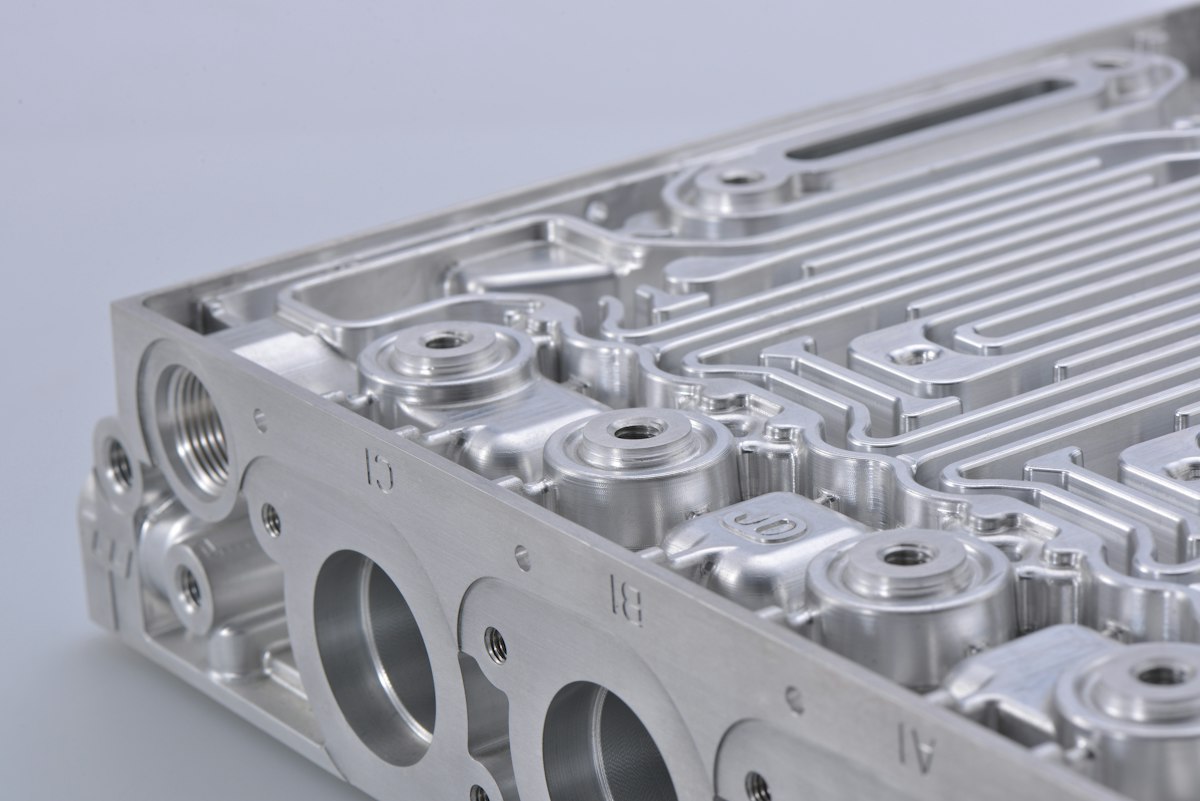
- Hydraulic and fluid manifolds
- Housings with angled bores
- Orthopedic implants and instruments
- Turbine and compressor blades
- Mold cores and inserts
- Robot arm joints and brackets
- Optical and sensor mounts
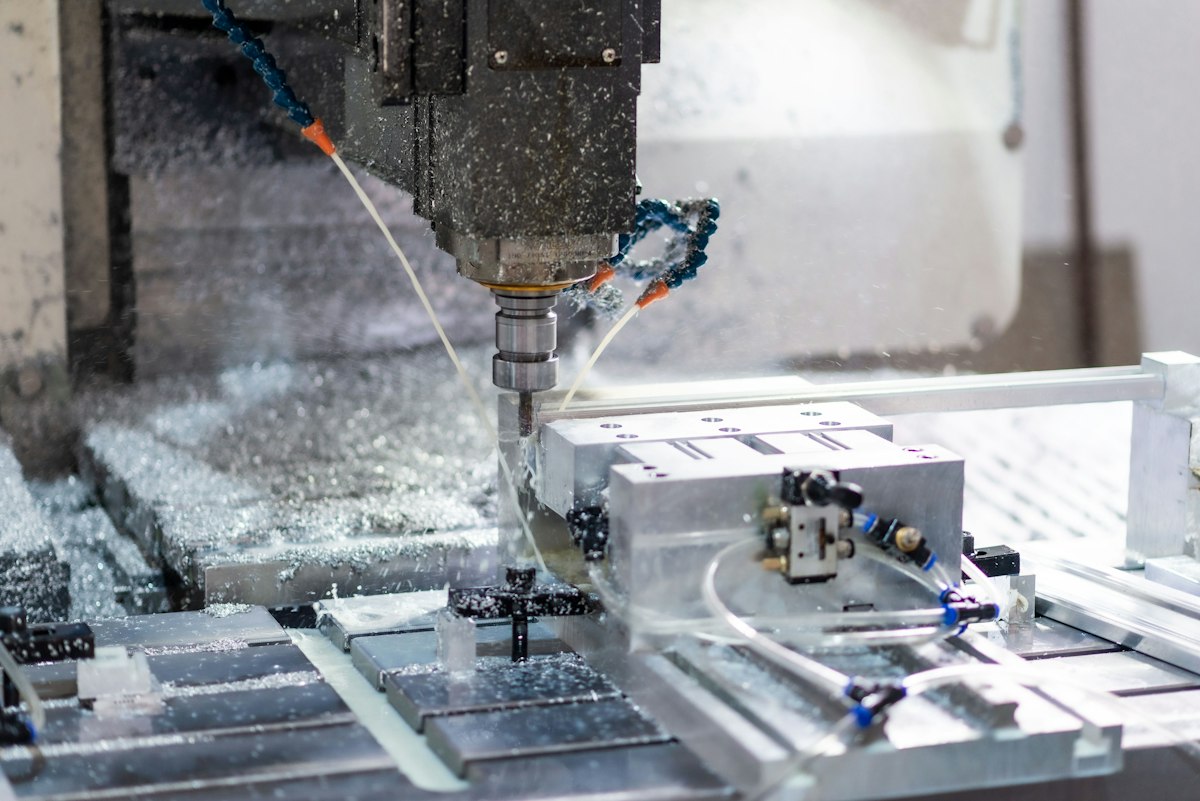
A 5-axis machine tilts the part or the spindle so the cutter reaches angled faces without a new fixture. Fewer setups means fewer chances for features on different faces to drift out of position.
3+2 or simultaneous 5-axis?
Both run on a 5-axis machine. The difference is whether the rotary axes move while the tool is cutting. It changes the price, so it is worth knowing which one your part needs.
3+2 positional
The table tilts and locks, then the machine cuts like a 3-axis mill. Then it tilts to the next angle.
- Right for prismatic parts with holes and faces at fixed angles
- Faster to program and usually cheaper per part
- Covers most housings, brackets and manifolds
Simultaneous 5-axis
All five axes move together during the cut, so the tool follows a curved surface at a constant angle.
- Needed for blades, impellers and freeform surfaces
- Better surface finish on contoured faces
- More CAM time, so higher setup cost on small orders
Materials and tolerances
What to expect when you ask a 5-axis shop to quote in each material. These are typical ranges, not promises. The shop that quotes you confirms what it can hold on your geometry.
| Material | What changes | Typical tolerance |
|---|---|---|
| Aluminum 6061 / 7075 | Fast to cut and the most common 5-axis material. 7075 for higher strength parts. | ±0.01 to ±0.025 mm is common |
| Stainless 304 / 316 / 17-4 | Slower cutting and more tool wear. 316L for medical and food contact. | ±0.01 to ±0.025 mm is common |
| Titanium Grade 2 / Grade 5 | Needs rigid setups and low heat. Typical for aerospace and implants. | ±0.01 to ±0.025 mm is common |
| Nickel alloys (Inconel 718) | Hard on tools and slow. Fewer shops take it, so expect longer quotes. | ±0.025 mm is a safer target |
| Tool steel (H13, D2) | Often machined before heat treatment, then ground or finished after. | Depends on heat treat sequence |
| PEEK, POM (Delrin), PTFE | Light cuts and careful fixturing. Plastics move with heat and moisture. | ±0.05 mm is realistic for most plastics |
Industries we match 5-axis work for
Different industries bring different paperwork. Mention material certs, first article inspection or cleanliness rules in your RFQ so we match shops that already work that way. See all industries.
Aerospace
Brackets, manifolds and blades in aluminum, titanium and nickel alloys.
Medical
Implants, instruments and device housings in titanium, 316L and PEEK.
Semiconductor
Chamber parts, wafer handling parts and frames with flat, clean surfaces.
Robotics
Joints, end effectors and lightweight structural parts.
Energy
Impellers, valve bodies and turbine parts.
Motorsport
Uprights, intake parts and one-off prototypes on short deadlines.
How it works
One RFQ from you. A short list of shops that fit. No bidding platform and no middleman on the order.
Send your RFQ
Upload a STEP file or PDF drawing and tell us material, quantity, tolerance and when you need it. Takes about three minutes.
We match up to 3 shops
We read the drawing and pick shops whose machines, materials and part size fit. You hear from us within 24 business hours.
Shops quote you directly
Each shop contacts you with a quote. You compare, ask questions and place the order with the one you choose.
What drives the price of a 5-axis part
Five things decide most quotes. If a price looks high, one of these is usually the reason, and some of them you can change on the drawing.
- Setup and programmingCAM programming and fixturing are paid once per order. On 1 to 10 pieces they are most of the price.
- MaterialTitanium and Inconel cost more per kilo and cut several times slower than aluminum.
- ToleranceEvery step tighter than you need adds machine time and inspection. Only tolerance what matters.
- QuantitySetup spreads over more parts as quantity rises, so price per part drops quickly past the first few dozen.
- FinishingAnodizing, passivation, coating and heat treatment add cost and a few days of lead time.
Have a drawing ready?
Send the short version now. We will ask for anything missing. If you prefer to give full details up front, use the full RFQ form.
Your files go only to the shops we match. Ask for an NDA and nothing is shared until it is signed.
Run 5-axis machines? Get RFQs that fit them.
Shops see a preview of each request before they take it and quote the buyer directly. We take no commission on the order.
Sell material, tooling, machines, finishing or logistics?
The shops in this network buy all of it. Tell us what you supply and we introduce you where it fits.
Questions buyers ask
Something else? Email .
Is this service free for buyers?
Yes. You pay nothing to send an RFQ or to receive quotes. Price, terms and delivery are agreed between you and the shop.
Who sees my drawing?
Shops first see a short preview with part type, material, quantity and tolerance. It does not include your name, company or files. Your contact details and files go only to the shops we match, up to 3. If you ask for an NDA, we hold the files until it is signed.
How many quotes will I get?
Up to 3. If only one or two shops are a good fit for the part, we send it to fewer rather than fill the list.
Do you machine parts yourselves?
No. We are a matching service, not a machine shop. The shops that quote you run the machines, and you place the order with them. See how the matching works.
Where are the shops located?
That depends on the part and on the region you pick on the RFQ form. You can ask for shops in North America, Japan, Korea or the rest of Asia, or leave it open and let us match on fit alone.
Which file formats can I send?
STEP or IGES for the 3D model, plus a PDF drawing with tolerances and finish notes. DWG and DXF also work. A STEP file together with a PDF drawing gets the most accurate quotes.
Guides for 5-axis buyers
- Process
5-Axis Thermal Compensation: How Shops Control Growth
5 axis thermal compensation limits drift from spindle heat, room changes and warm parts. See the sources of growth, typical sizes and what to ask a shop.
- Industries
5-Axis Mold Machining: Cores and Cavities vs EDM
5 axis mold machining cuts cores and cavities with short tools and fewer electrodes. See when it beats EDM, where EDM still wins and what to send for a quote.
- Materials
5-Axis Machining Copper and Brass: Burrs and Finish
5 axis machining copper and brass: why pure copper is gummy, why free-cutting brass is easy, and how to specify grade, finish and plating on an RFQ today.